We are sent to this world with tasks and missions that are as specific to us as our fingerprints. We each have particular corrections to make and unique Light to reveal on our journey of life. Living with this knowledge can make us naturally more accepting and less judgmental of others, because we understand that if a person was made a certain way, the Creator did so to give them the opportunity to grow.

Working to make Enugu 'WORK'.
Friday, June 3, 2016
DAILY AWARENESS: Specific Missions Friday June 3, 2016

Tuesday, May 31, 2016
DAILY AWARENESS: Believe in People Tuesday May 31, 2016
No matter what. Sometimes to get to our next level in life, all we need is someone to believe in us.
Choose to believe in people. Believe they have the ability to change, to succeed, and to grow. The power of belief is the power to lift people up.
DAILY AWARENESS: The Best Day of Our Lives Monday May 30, 20
Each day brings us closer to the Final Redemption. No matter what is occurring, that Redemption will happen. It’s just a matter of time. What this means for us on a more practical level is that with every second that passes, we inch towards that perfect world, and our perfect selves… simply because that is our destiny.
What a wonderful thought it is that some of the best days of our lives haven’t even happened yet. Have certainty the best is yet to come.
DAILY AWARENESS: The Purpose of Our Blessings Sunday May 29, 2016
Every blessing is given to us for two purposes: The first is for us to enjoy it, and the second is so that we may share that blessing with others.
Spiritually speaking, there is no such thing as “mine.” Every gift, every talent, every miracle we are given from the Creator, is one that we are meant to use to make the world a better place to be.
DAILY AWARENESS:To Be Happy Saturday May 28, 2016
Life has its ups and downs, but through it all, we can continue to choose happiness with an appreciation for the many blessings we have.
We don’t need for everything to be perfect in order to be happy.
We just need to be happy with everything we have.
Ebonyi must Go:Enugu state clamps down on street hawkers
There was pandemonium today in the state capital as the state government clamped down on all Street hawkers in the state.Traders along major Street,and bus stops were chased and their wares siezed.From prisons through holy ghost, ogui road ,imt/polo park bus stop etc
Some of the hawkers complained that they were not given notice neither was there any place mapped out for them to sell their goods.
Mostly ebonyi indegens who were among said that is another form of Ebonyi must Go and that is their only source of livelihood.
Monday, May 30, 2016
Police arrests 40 MASSOB members at Nsukka church
Movement for the Actualization of the Sovereign State of Biafra (MASSOB-BIM) has raised alarm that the police have arrested 40 of her members at St. Theresa’s cathedral, Nsukka Monday while attending a special thanksgiving mass service in commemoration of 49th anniversary of the declaration of the defunct Biafran Republic by the late warlord Chukwuemeka Odumegwu Ojukwu. . The zonal leader of MASSOB in Enugu North, Chief James Omeke said that it was surprising that police ambushed the catholic cathedral and quietly sneaked into the church and arrested the members in their solemn moment at the special thanksgiving mass for the 49th anniversary of the republic’s declaration. “The arrest, harassment and intimidation of the members would not deter movement for the actualization of Biafran republic but would spur the struggle to freedom; Nigerian government has not been fair to the freedom of Biafra. Meanwhile Enugu state police command through its spokesman Sp Ebere Amaraizu has said that no fewer than thirteen suspected persons believed to be members of MASSOB/Biafra Independent Movement(B.I.M) were nabbed by security operatives of the state command in the early hours at Edinburgh axis of ogui Enugu The members were rounded up based on intelligence information that that suspects had converged with with flags, T.Shirt with different inscriptions portraying MASSOB/BIM at Edinburgh axis of Ogui to commence protest march before the security operatives swooped on them. Suspects in their reactions maintained that they are members of MASSOB but of Biafran Independent Movement(B.I.M), stating that they converged to pray at the spot before embarking on peaceful march with flags in commemoration of Biafran independence. It could be recalled that the state command had earlier warned against protest by any group of persons under any aegis, maintaining that no iota of lawlessness will be entertained from any individual or group of persons fanning embers of unlawful act aimed at causing breakdown of law and order in the state as the command working in partnership with other security agencies.
Sunday, May 29, 2016
Toto federal constituency election inconclusive
INEC declares Nasarawa/Toto federal constituency by-election inconclusive
The Independent National Electoral Commission (INEC) on Sunday declared that the just concluded Nasarawa/Toto Federal Constituency by-election inconclusive due to cancellation of votes as a result of over voting. The Constituency Returning Officer of the election, Dr Wilfred Uji of Federal University, Lafia, Nasarawa State, made this known while announcing the outcome of the pol
Thursday, May 26, 2016
DAILY AWAERNESS:Any Storm Is Only Temporary Monday May 23, 2016
The Rav would often teach: “All chaos has an expiration date.”
When going through one of life’s tougher moments, don’t forget that any storm is only temporary, and the sky is made much clearer from it in the end.
"President Buhari Critically Ill, Set To Be Flown Out Of Nigeria" - PDP

The main opposition party, Peoples Democratic Party PDP, has alleged that President Muhammadu Buhari is critically ill and set to be flown out for medical treatment.
It will be recalled that the presidency announced that Muhamamdu Buhari was unable to go to Lagos state as planned for unclear reasons, however he received Ogun State governor, Ibikunle Amosun at the state house same day.
PDP also accused NNPC boss Ibe Kachikwu of bribing representatives of Niger Delta avengers with $10m. The amount was given to them after a meeting held at Transcorp Hilton Hotel,Abuja.
The PDP likewise claimed that the avengers short-changed Ibe Kachikwu by bombing Chevron’s Escravos tank farm in Delta this morning.
See tweets below
How to Keep Your Breasts from Sagging After Breastfeeding

Pregnancy and breastfeeding doesn’t have to leave your breasts droopy or saggy when you can help it. Find top ways to keep your breasts firm and in good shape, despite the several strains of pregnancy and nursing your baby…
Always wear a bra that offers good support. As your breasts become fuller during pregnancy, buy supportive bras that fit perfectly to accommodate the different changes in size. While nursing, you may opt for nursing bras with supportive bands and wider straps, making sure the cup size is the right one for you.
Keep up with wearing supportive bras of the right size after breastfeeding to maintain your breasts’ firmness. You may also wear a light support nighttime bra to prevent breast ligament from stretching as you move while sleeping.
In addition, always wear a sports bra while working out.
Good breastfeeding posture. Slouching or angling your breast down so it reaches your baby will make your breast droop overtime. Don’t lean over baby to nurse as most mothers tend to do. It’s best to use a nursing pillow to raise baby to your breasts.
When you stop nursing, maintaining proper posture – sitting and walking upright – will also help. Do not slouch!
READ ALSO: What You Should Know About Exclusive Breastfeeding
Lose your baby weight gradually after pregnancy. While mums usually want to fit into your pre-pregnancy jeans a week or less after baby’s birth, embracing a gradual process will give your breast skin ample time to recover and repair, curbing chances your breasts will sag.
Moisturize. Apply carrot oil, shea butter, vitamin E oil or cocoa butter to your breasts daily to boost breast skin suppleness and elasticity. This will also promote recovery from all the stretching that took place during pregnancy, reducing the appearance of stretch marks on the breasts.
READ ALSO: See How Breastfeeding Could Reduce Your Risk Of Breast Cancer
Massage with hot and cold water.Massage your breasts, switching between hot and cold water. You can do this while taking a shower, ending the massage with cold water. While the hot water boosts blood circulation, the cold water helps tone and tighten breast skin.
You can also massage with a warm wet towel, and subsequently use ice cubes to massage in circular motion for about one minute.
Exercise. If your doctor approves, including strength training exercises such as push-ups in your routine will generally improve your muscle tone and this will have impact on your breasts’ appearance as well.
Working out your core and back muscles will also help correct bad posture which can make your breasts sag.
Eat the right foods. Some experts advise nursing mums should eat more foods, including fruits, vegetables, diary, nuts and seeds, which are rich in healthy fats, proteins, antioxidants and vitamins to improve overall skin elasticity and prevent sagging.
FG, states, LGs allocation reduce by N18.2 billion from last month
, Abuja Bureau Chief ABUJA—The Federal Government, states and local governments have shared N281.500 billion from federation revenue that accrued to the nation in the month of April. The figure represented a decline of about N18.2 billion compared to the N299.74 billion shared last month. The Minister of Finance, Mrs Kemi Adeosun, who briefed journalists at the end of the Federation Account Allocation Committee, FAAC, meeting in Abuja yesterday, blamed low oil receipts for the low revenue. The Federal Government took N110.612 billion; states, N82. 663 billion and local governments, N60.904 billion. Oil-producing states got an additional N15 billion in derivation. The revenue collection agencies deducted costs of collection under which the Federal Inland Revenue Service, FIRS, took N4.822 billion; Nigeria Customs Service, N2.489 billion, while Department of Petroleum Resources, DPR, got N1.198 billion.
Wednesday, May 25, 2016
Photo: Police arrest some Fulani Herdsmen responsible for Nimbo community attack in Enugu

The Nigerian police have arrested five suspects namely Mohammed Zurai, Ciroma Musa, Sale Adamu, Suleiman Laute and Haruna Laute, allegedly involved in the midnight attack that left at least 20 people dead in Nimbo community in Uzo-Uwani Local Government Area, Enugu State.
A statement released by police spokesperson, Olabisi Kolawole, said the Inspector General’s Intelligence Response Team (IRT) carried out the operation based on credible intelligence.
This successfully lead to their arrest and also a recovery of a Gionee L88 mobile phone with a memory card that contains a video recording of the massacre in the community.
Dead body of Sen Dr Offia Nwali who lost his entire Family in 1983 air crash in Enugu found in a pond
Police recover senator’s corpse from pond

Governor Dave Umahi of Ebonyi State
The Ebonyi Police Command has confirmed the retrieval of the corpse of a Second Republic Senator, Dr Offia Nwali, from a pond behind his house.
ASP George Okafor, the Command’s Public Relations Officer (PPRO), made the confirmation in Abakaliki.
He said Nwali’s corpse was found in a pond at the back of his building in his hometown of Ameka, Ezza South Local Government Area, at the weekend.
“We cannot establish whether he drowned inside the pond or whether he was killed but investigations have commenced to unravel the mystery behind his death.
“We have not made any arrest so far but we assure the citizens of the state that we would ensure that the matter is investigated to its logical conclusion,” he said.
Meanwhile, Governor David Umahi of Ebonyi has described the death of 74-year-old Nwali as a ‘monumental loss’ to the state and nation.
Umahi, who commiserated with Nwali’s family during a condolence visit on Tuesday, described him as a great scientist and patriotic Nigerian.
“His death is shocking to all citizens of the state as his life which was full of mysteries, embodied truth and commitment to the state’s cause,” he said.
The governor who was accompanied by the Secretary to the State Government, Prof. Bernard Odoh, and top government officials, urged Nwali’s children to immortalise him.
“You should live just and principled lives which your late father epitomised during his sojourn on earth .
“The state government would assist the family during his burial and afterwards while upholding the legacies he left behind,” he said.
Nwali’s first son, Oguzor, said that his corpse had been deposited at the Federal Teaching Hospital, Abakaliki mortuary.
Oguzor described his father as a legend, noting that his love for the unity of the state, Igbo race and Nigeria, knew no bounds.
Nwali was one of the first Africans to obtain a doctorate degree in Computer and Analytical Studies from Harvard University, U.S.
His return to Nigeria in 1972 was facilitated by a former Inspector General of Police, Muhammadu Yusuf, as he was appointed Chairman of the School Board by the then East Central State Government.
He represented Abakaliki Senatorial District at the National Assembly from 1979 to 1983 and was the first individual to submit a written request for the creation of Ebonyi on Oct. 10, 1979.
Nwali lost his entire family in a Forker 28-plane crash at the Enugu Airport in 1983 but later remarried.
The Police Command in Ebonyi also confirmed the retrieval of the corpses of two students of Federal Government College, Okposi in Ohaoazara Local Government Area, from a stream in the area.
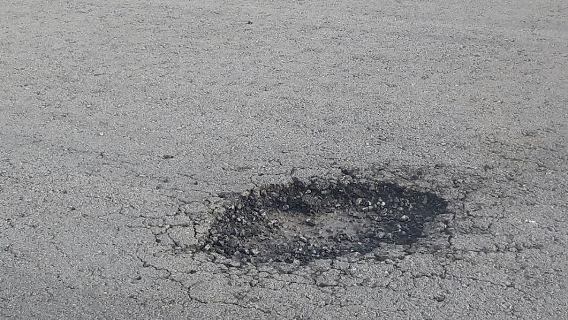
See bad state(potholes) of Enugu Airport runway (Photos)


This is the runway of the Enugu Airport
"This is extremely dangerous. Truth is, planes shouldn't be landing on this runway at all! Pot holes everywhere and they have tried patching the holes with cement, and the runway is made of asphalt. It doesn't make any sense. This is a disaster waiting to happen. I'm genuinely concerned and this needs attention ASAP. Some of the pilots have since refused to fly to Enugu due to the current situation. People's lives are at stake!" she wrote. See more photos after the cut...




BREAKING NEWS: Gov Ugwuanyi agricultural policies Begins with Largest Commercial Agric Farms In Nigeria

The Enugu State Government has set aside 750 hectares of land for commercial agriculture for youths and women in the state, Mr Michael Eneh, the Commissioner for Agriculture and Natural Resources, said on Monday.
Speaking to ENUGU REPORTERS, he said, “Contracts have been awarded by the state government for the clearing of a total of 750 hectares of land for commercial agriculture in the state.
“On completion, the land will be segmented into three-hectare plots for allocation to youths and women to undertake commercial food cultivation.”
Some of the communities chosen for the programme are Ogbeke, 50 hectares; Oduma, 50 hectares; Ogulogu, 100 hectares; Akpugo-Eze, 50; Owo, 50 hectares; and Nnewe, 100 hectares.
Others are: Ikem, 50 hectares; Agkuibeje, 50 hectares; Oghu, 50 hectares; Eha Amufu, 100 hectares; Obimo, 50 hectares; and Amangunze, 50 hectares.
According to the commissiomer, the Governor Ifeanyi Ugwuanyi administration has purchased 20 tractors with complete sets of implements for each of the tractors at the cost of N175.3 million.
“The tractors are to be given to young agricultural/engineering graduates to render tractor hiring services to farmers, especially those farmers at the green cities (arable planting areas), where commercial agriculture is being practiced, on a cost recovery basis for sustainability.
“The beneficiaries will be required to pay back the subsidised cost of the tractors and its implements over a period of six years,” he said.
REAL REASON Why Tomato Is Scarce in Nigeria – Minister Of Agriculture

May 25
The Federal Government of Nigeria yesterday revealed that the pest Tuta absoluta, responsible for the massive destruction of tomato on farmlands has hit a total of six states in Nigeria.
During the revelation, the Federal Government also noted that a total of $400 million is spent annually by the nation in importing substandard tomato paste.
Declaring the scourge and the economic implications of the pest, the Minister of Agriculture and Rural Development, Mr. Audu Ogbeh said: “The pest can also attack even pepper and Irish potato. So we are confronting something quite serious. But the good thing is that we are tackling it right now as experts will commence work immediately. We are bringing the commissioners and governors of states to jointly attack this pest, which, if not dealt with, will create serious problems for food security in our country.”
Mr Audu Ogbe during the press statement also noted and discarded speculations that the establishment of tomato processing plants had mopped up the tomato fruits thereby causing its scarcity.
He reveled that one of the major disadvantages of the pest was its high reproductive rate which enables it grow a large population in a short period and cause more damage to the tomato fruits on the farmland. He noted the pest to have affected Jigawa, Kano, Katsina, Kaduna, Plateau and Lagos.
Ogbeh however noted that the Federal government has been in talks with experts on how best to tackle the development adding that the experts had proffered some possible solution and offered some varieties of resistant tomatoes which will grow well in the western region of the country as an alternative measure.
Photo:man rapes 15yr old girl at gun point in Enugu

The Enugu state command of the Nigeria Police force through its operatives of the state criminal intelligence and investigations Department have commenced a full scale investigations into an alleged incident of a rape case of 15 year old girl on gun point.
It was gathered that suspect identified as Casmir Eze (photo above) had on 22/5/16 at about 2am allegedly gain an entrance to the compound of the victim identified as one Ogechi 15 years and an SS1 student by scaling through the fence and forced the victim to open the door or risked being shot, suspect who allegedly was covering his face with scarf went into the room and pointed a gun to the victim and commanding her to switch off the lamptern in the room and thereafter forcefully ponced on the victim and had carnal knowledge of her.
The victim reported to the relations who assisted her to report to the police for necessary action and also leading to the identification and the arrest of the suspect who is now helping the police operatives in their investigations.
Suspect in his word confirmed the allegation and maintained that it was the devil that pushed him into the act. According to him "I dont know what came over me although,I have been targetting how to get the girl since and no way hence I had to come through this way."
The victim Ogechi an orphan is expressing an ill feeling and shock on how suspect forced himself into her room and had carnal knowledge of her without her consent and on gun point.
Saturday, May 21, 2016
The Fact of Fuel Pricing,How Govt arrived at 145: Subsidy, PPPRA, and Cost-Fixing, By Michael Fani
I will suggest we adopt a pricing model similar to that of South Africa. Prices are set by the government (PPPRA in our case) and updated at the beginning of each month. Variable allowances are set for each region to account for transportation cost differences, especially between coastal and inland regions. PPPRA could then retain the floating margin of N6.74 in the pricing template but expunge the bridging fund. It should then divide the country into geographical zones based on the National Transport Average.
It is no longer news that the Federal Government of Nigeria has removed the much talked-about subsidy on Premium Motor Spirit (PMS) popularly called petrol. The announcement by the minister of state for Petroleum Resources, Ibe Kachikwu, attracted mixed reactions from Nigerians:
i. Those in support of the removal on a purely economic logic;
ii. Those who support the removal but believe the timing is wrong;
iii. Those who now support the removal because they voted for the current president and can trust the incumbent government more than the previous one;
iv. Those who are purely against subsidy removal, and;
v. Those who are against the subsidy because the current proponents were against same policy by the previous government.
I have read arguments and counter-arguments on social media on why those who led the nation to ‘Occupy Naija’ protests in 2012 should or not do the same now. Whatever side of the divide we belong to, however we twist history or ‘sugar-coat’ what we say, it was wrong to oppose fuel subsidy removal in 2012 and it is wrong to attempt to oppose it now or rubbish the current attempt made by the government.
Where do I belong? I support subsidy removal. I’m also a believer in the school of thought that we need some level of price control to ensure consumers are protected from arbitrary prices by marketers. What I disagree with is making me as a consumer pay for the inefficiency in the importation value chain and spurious cost elements in the pricing template.
I will attempt to review all the elements of the current PPPRA PMS pricing templates and give my view on each of them. The views are based on information available to me. Most of the information I use in this article are available on PPPRA website. My views could change if I have any other information that invalidates any of my current assumptions.
I have categorised the cost elements on the PPPRA templates into two — Landing Costs and Distribution Margin. Landing Costs are typically costs associated with the foreign purchase of petroleum products, freight and delivery into the depots at the ports. Distribution Margin are in-country costs incurred in order to move the petroleum products from ports of delivery to the consumer, mostly into the cars and unfortunately into generators.
The contribution of the different cost element to the final retail price is depicted in the picture below:
Landing Costs
1. Product and Freight Cost (C+F): Product cost represent the monthly moving average cost of products as quoted on Platt’s Oilgram. The reference spot market is North West Europe (NWE). Freight cost is the average clean tanker freight rate (WorldScale (WS) 100) as quoted on Platt’s. It is the Cost of transporting 30, 000MT (30kt) of product from NWE to West Africa (WAF). Freight rates are based on publications by London Tanker Brokers Panel on January 1 each year. There is also Trader’s margin of $10/MT factored into the Freight cost.
This cost element also includes Insurance costs associated with product importation. There is a War Risk Insurance which is charged at a weekly rate of between $10,000 — $12,000 for standard vessels. This comes to between $0.67 — $0.8/MT. Also, petroleum products are imported using foreign flagged vessels as against Nigerian vessels due to concerns around the ship worthiness of the Nigerian vessels. This leads to an additional increase of N1 million for the Temporary Import Permit (TIP).
C+F is currently N109.16 on the pricing template. It represents 79 percent of the Expected Open Market Price (EOP) of N138.26 or 75 percent of the current retail price of N145.00.
My View: We cannot do anything about this cost. Without local refining, there is a near zero opportunity to reduce this cost element. If we refine locally, the freight cost, which is abysmally high because of insecurity and activities of pirates, will be eliminated. However, PPPRA should separate product from freight and insurance costs on the template for more transparency. The Trader’s margin which comes to N2.22 per litre (using N298:$1) should be removed if it has not been removed already. It is like rewarding an importer twice since we already made provision for the profit margin.
2. Lightering Expenses: This refers to Ship to Ship (STS)/Local Freight Charge incurred in the trans-shipment of petroleum products from a mother vessel to a shuttle vessel, for onward movement of both vessels into the jetty. Lightering is included in the template because our ports have low draught and cannot accommodate vessels of high dead weight.
This charge includes receipt losses of 0.3 percent in the process of products movement from the high sea to the Jetty and then to the depot. The mother vessel’s expenses are based on the allowable 10 days demurrage exposure at the rate of $28,000 per day.
The Lightering Expenses also include the Shuttle vessel’s chartering rates from Offshore Lagos to Lagos and Port Harcourt. Transshipment (STS) process is as a result of peculiar draught situation and inadequate berthing facilities at the Ports.
These cost element contribute N4.56 to the current EOP.
My View: The deep-sea port in Lekki should resolve some of these issues when completed. However, allowing 10 days demurrage which comes to $280,000 on each vessel amounts to rewarding inefficiency in the system. We can make some savings here to reduce the EOP.
3. Financing Cost: This is the cost of funds for the imported product. It includes the cargo financing based on the International London Interbank Offered Rates. This element contributes N2.51 to the current EOP.
My View: This is a valid cost item which needs to be included in the template. On a good note, the interest charge on the subsidy element which has an allowable 60 days period at Nigerian Inter Bank Offered Rate (NIBOR) seems to have been expunged as expected.
4. NPA Charge: This is the cost to utilise jetty facilities based on the tariff set by the Ports Authority. Jetty facilities are utilised to off-load petroleum products from vessels into on-shore storage facilities. This cost element contributes N0.84 per litre or $3.8 per metric tonne of petrol to the pricing template.
My View: PPPRA needs to be commended for bringing down the NPA charges from $10.5/MT to the $4/MT. However, NPA needs to justify these charges by ensuring the ports do not contribute unnecessarily to vessel demurrage and bottlenecks.
5. NIMASA Charge: This refers to charges on each vessel by the Nigerian Maritime Administration and Safety Agency. This contributes N0.22 to the current pricing regime.
My View: This is an unnecessary charge on the template. Government can waive this on the importation of petroleum products.
6. Jetty Throughput: This is the tariff paid for use of facilities at the Jetty by the marketers to move products to the storage depots. NNPC uses its own Atlas Cove Jetty. The value is currently N0.60/litre.
My View: This is a valid cost and will encourage investment in jetties.
7. Storage Charge: Storage Margin is for depot operations covering storage charges and other services rendered by the depot owners. The charge is currently N2.00/litre, down from N3.00/litre previously.
My View: This is a valid cost and will encourage investment in depots especially in other locations such as Lekki, Calabar etc.
Distribution Margin
1. Retailers Margin: The margin allows for costs incurred by the retail outlet operator in selling petroleum products. In this cost, account is taken of all related costs such as rental, interest, labour and overheads. This contributes N6.00/litre to the EOP.
My View: I do not understand the basis for increasing the margin from N4.60 to N6.00/litre. Any serious player will look for efficiency in the chain to make sure he maximises margin. Consumers should not pay for inefficiencies.
2. Transporters Allowance: Margin for trucking petroleum products and distributing to retail outlets. Transportation is either by road and pipeline or by a combination, from coastal to inland depots. This element contributes N3.36/litre to the open price.
My View: This charge provides excessive rewards to marketer/retailers who sell their products in Lagos, south-western states and other coastal states where transportation cost is less than N2.00/litre. I will come back to this later.
3. Dealer Margin: Margin for procurement, importation and clearance of petroleum products till the point it is stored in the depot. This cost element contributes N2.36/litre to the current pricing calculation.
My View: This charge assumes that some individuals will only import the products and sell to retailer at the depots. However, there is already a provision of N2.13 as trader’s margin in the C+F cost. Therefore, I consider this cost as double-counting. It should be removed from the template.
4. Marine Transport Average: MTA is for movement of petroleum products to riverine areas that are not accessible by road through floating jetties. This represents N0.15 on the template.
My View: This charge should be scrapped. The volume of petrol transported through this medium is negligible compared to average national consumption.
5. Admin Charges: This cost component accounts for the services of PPPRA, DPR for documentation activities. This represents N0.30/litre on the template.
My View: This charge should be scrapped. We pay taxes to government. These should be used to fund agencies to perform their statutory roles.
6. Bridging Fund: This is the transport cost for distribution of petroleum products from coastal regions to the inter-lands (up-country) that are outside the boundaries as defined in National Transport Average (NTA). It ensure products are sold at same price all over the country. This represents N6.20 on the price template.
My View: To me, this is the most ridiculous item on the template. Should we still retain Petroleum Equalisation Fund with the removal of subsidy? I believe this cost should be scrapped. There are a lot of incentives already in the template that allows retailers to sell products within the price band in Sokoto, Kano, Maiduguri etc. We should remove all avenues for corruption associated with managing the fund. It has never been successful. I live in Lagos and I do not want to pay extra N6.20/litre so that fuel can sell at same price in Kotangora. The same principle applies to food commodities like yam and tomatoes which are more expensive in Lagos than Paiko (Niger State) and Katsina respectively. Let each enjoy his/her geographical advantage. If the government is courageous enough to remove subsidy, same courage should be applied to removing the bridging fund.
Exchange Rate
This is the main driver of the new pricing regime. Any upward or downward movement of the exchange rate will have significant impact on the fuel price. PPPRA has pegged the exchange rate at N298:$1 in the latest pricing template. Many analysts believe that by this single action, the government has unofficially devalued the naira. It will be interesting to note that naira fell to about N345:$1 in the parallel market in response to the subsidy removal by government.
How sustainable is this new ‘official’ rate? Only time will tell. If the marketers are not able to source USD at N298 and the template needs to be adjusted to N320:$1, open market prices will be about N150/litre thereby moving the upper limit of the price band to around N160/litre.
Talking about the upper limit of N145/litre as the retail price band given by the government, this to me is over-rewarding the marketers. The EOP of N138.26 already provides N6.00 as retailers margin (up from N4.60), N2.36 as dealers margin etc. So why create additional margin of N6.74/litre (N145 minus N138.26) for the marketers? We know fully that marketers will opt for the upper limit of the price range.
This is a very good time for NNPC to be profitable in its retail business. The Honourable minister of state/ NNPC GMD said NNPC will compete fairly with other marketers in the city but sell close to N135 in remote areas. Three questions are still begging for answers though:
a. How many NNPC outlets are in the remote areas vs city, and what’s NNPC’s definition of remote areas?
b. Thanks to the efforts of the current regime, the refineries are now working at ~40 percent. Would we be paying N145 too for the locally refined products at NNPC outlets? Bearing in mind that freight and some other costs have been eliminated.
c. What rate is NNPC sourcing its forex? If NNPC gets it at N197, why should it sell at N145/litre?
In conclusion, I will suggest we adopt a pricing model similar to that of South Africa. Prices are set by the government (PPPRA in our case) and updated at the beginning of each month. Variable allowances are set for each region to account for transportation cost differences, especially between coastal and inland regions. PPPRA could then retain the floating margin of N6.74 in the pricing template but expunge the bridging fund. It should then divide the country into geographical zones based on the National Transport Average. We will then have the upper limit of the band (N145/litre) for Sokoto and Maiduguri while the lower price band (N139/litre) is enforced in Lagos and other cities in Zone 1.
Lest I forget, Yoruba people are very good at forming greetings for any occasion. There are different greetings for early morning, late morning, early afternoon, late afternoon, evening, night etc. I was jogging within my estate on Wednesday, the day subsidy removal was announced. Someone I knew just stopped me and greeted me in Yoruba “Eku ko si subsidy mo”. I gave him a cynical grin knowing well that it will now take about N14,000 to fill my tank.
To all reading this piece, Eku ko si subsidy mo oh!
demaikel@gmail.com
5 Things You Should Never Put On Your CV





Unless you are crazy rich or very, very lucky, at some point in life you will have to look for work. Job searching is almost an art, and requires patience and being able to present yourself well in writing, speaking, your attitude and how you dress.
It’s a pretty major feat to be able to present your whole working life on one sheet of paper. Your résumé is one piece of paper (or PDF) that can either land you that job, or keep you stuck in the frightening world of unemployment.
Putting together a résumé is not easy. Rules change; but here are five simple things you should never include on your résumé:
Irrelevant jobs
The recruiter cares very little if you’ve worked in fast food when you were 16 if you are applying for a job as a community manager, or a consultant, or something other than a fast food chain, for example. Only include relevant job experience on your résumé.
Extra contact information
Put your name, email and cell phone number on the resume, but nothing more! An address and social security number are completely unnecessary. It’s a simple thing, but it can make you look naive for providing sensitive information.
Your cutesy email address
Speaking of contact information, some people don’t ever want to abandon their first email address that was created in high school. But if you have something like beachgirl29@hotmail.com, you’ll want to think about changing it for something slightly more professional.
References
You’re asking for a job, not a credit check. Information about references only takes up valuable space; and the phrase “References available upon request,” is unnecessary — companies assume you will provide references if they ask for them.
Too much text
Keep your achievements and wow-ing points brief. Your résumé is not the time to write paragraphs about your accomplishments. Make the points brief enough to easily skim, and just long enough to peak the curiosity of the recruiter. Your interview is the time to turn those statements into stories that demonstrate your true value.
For those recruiters who read this, what other recommendations do you have? For everyone else, good luck in all in your searches.
Subscribe to:
Posts (Atom)